


.223 vs 5.56 NATO: The Great Rifle Round Rumble
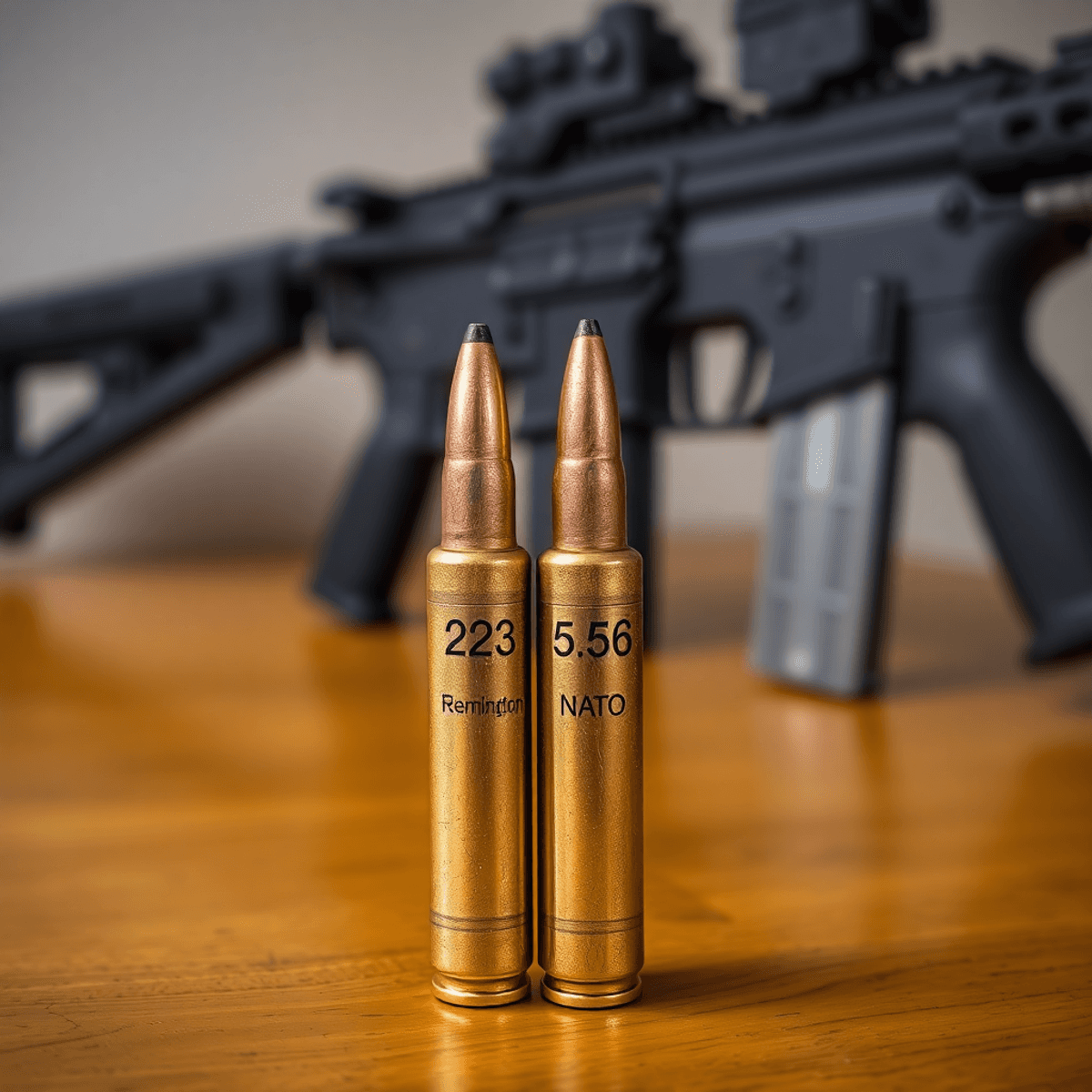
.223 vs 5.56 NATO: The Great Rifle Round Rumble
The Second Amendment crowd knows the debate well: .223 Remington or 5.56 NATO? Two rounds, one legendary platform, and a whole lot of confusion. If you’ve ever stood in front of your AR-15s scratching your head at the ammo shelf, you’re not alone. Grab your favorite coffee mug—or tactical thermos—and let’s break it down with wit sharper than a freshly oiled bolt carrier.
Meet the Contenders
.223 Remington
- Born in the late 1950s
- Civilian darling, especially for varmint hunting and target shooting
- Slightly lower chamber pressure compared to its military sibling
5.56 NATO
- Officially “5.56x45mm NATO”
- Standard issue for countless militaries (Uncle Sam included)
- Packs a bit more punch—higher pressure equals higher velocity
Specs on the Table: What’s the Real Difference?
| Feature .223 Remington 5.56 NATO Chamber Pressure
|
~55,000 psi
|
~62,000 psi
|
| Case Thickness
|
Thinner
|
Thicker
|
| Leade (Freebore)
|
Shorter
|
Longer
|
Translation for those who skipped ballistics class:
“The .223 is like a polite neighbor, while the 5.56 is that one friend who always brings fireworks to the barbecue.”
Interchangeability: Can You Mix and Match?
Loading Up Your AR-15s
Before stuffing mags with wild abandon, here’s what every gun carrier should know:
- AR-15 chambered for .223: Only safe with .223 rounds. Firing 5.56 can lead to excessive pressures and a bad day at the range.
- AR-15 chambered for 5.56: Eats both .223 and 5.56 without complaint.
- Barrel Markings: Look for “.223,” “5.56,” or “.223 Wylde” stamped near your chamber.
The Golden Rule
When in doubt, check your barrel before you check your ego.
Why Does This Even Matter?
Performance Differences
- Velocity: 5.56 launches faster due to higher pressure.
- Accuracy: At short ranges, both rounds perform similarly; at longer distances, differences become more pronounced.
- Terminal Ballistics: 5.56 tends to fragment more reliably upon impact—something to keep in mind if you’re thinking about home defense or coyotes with an attitude.
Cost & Availability
Let’s be honest—sometimes your wallet makes your ammo decisions:
- .223 often edges out in price and availability at civilian stores
- Surplus 5.56 can be had by the crate when times are good
Mythbusting: Internet Legends vs Reality
“All AR-15s can shoot both!”
Not unless you want to meet your local gunsmith under embarrassing circumstances.
“There’s no real difference between the rounds.”
Try explaining that to someone who just popped a primer out of battery.
“You lose accuracy using one over the other.”
Not unless you’re shooting benchrest matches at 600 yards—or trying to impress internet strangers.
Second Amendment Style Points
Let’s not forget why this debate matters in the first place:
The right to bear arms means knowing exactly what arms (and ammo) you’re bearing.
Whether you’re defending home and hearth or just showing off your tack-driving AR at the range, understanding rifle rounds like these keeps you safe, legal, and prepared.
Choosing Your Champion: Which Round Wins?
Ask Yourself:
- What’s stamped on my barrel?
- Am I plinking cans or prepping for SHTF?
- Do I value mil-spec reliability or penny-pinching practice?
For Most Gun Carriers:
- Target shooters and varmint hunters often lean toward .223.
- Tactical enthusiasts and preppers swear by 5.56 for its rugged versatility.
- Those running “.223 Wylde” chambers get the best of both worlds—a true unicorn in rifle land.
A Quick Word on Reloading & Handloading
Reloaders love splitting hairs over brass thickness and case capacities:
If you’re reloading spent cases from either round, stick with like-for-like recipes.
Mixing data is a recipe for disappointment (or worse).
Frequently Asked Questions (FAQ)
Q: Will my AR blow up if I shoot 5.56 in a .223 chamber?
A: Not likely—but increased wear and potential malfunctions are real risks.
Q: Is there really that much difference in recoil?
A: Both are mild-mannered compared to old-school battle rifles; most shooters won’t notice unless they’re counting foot-pounds.
Q: What about “.223 Wylde”?
A: It’s designed to safely fire both rounds accurately—think of it as Switzerland but with better groupings.
Closing Shot
When it comes down to .223 vs 5.56 NATO, knowing your ammo is as vital as knowing your rights under the Second Amendment.
So next time someone asks which round reigns supreme in AR-15s, just wink knowingly—and maybe send them this guide before they start another heated forum thread.
Stay sharp, shoot straight, and keep those magazines loaded (with the right stuff).


